

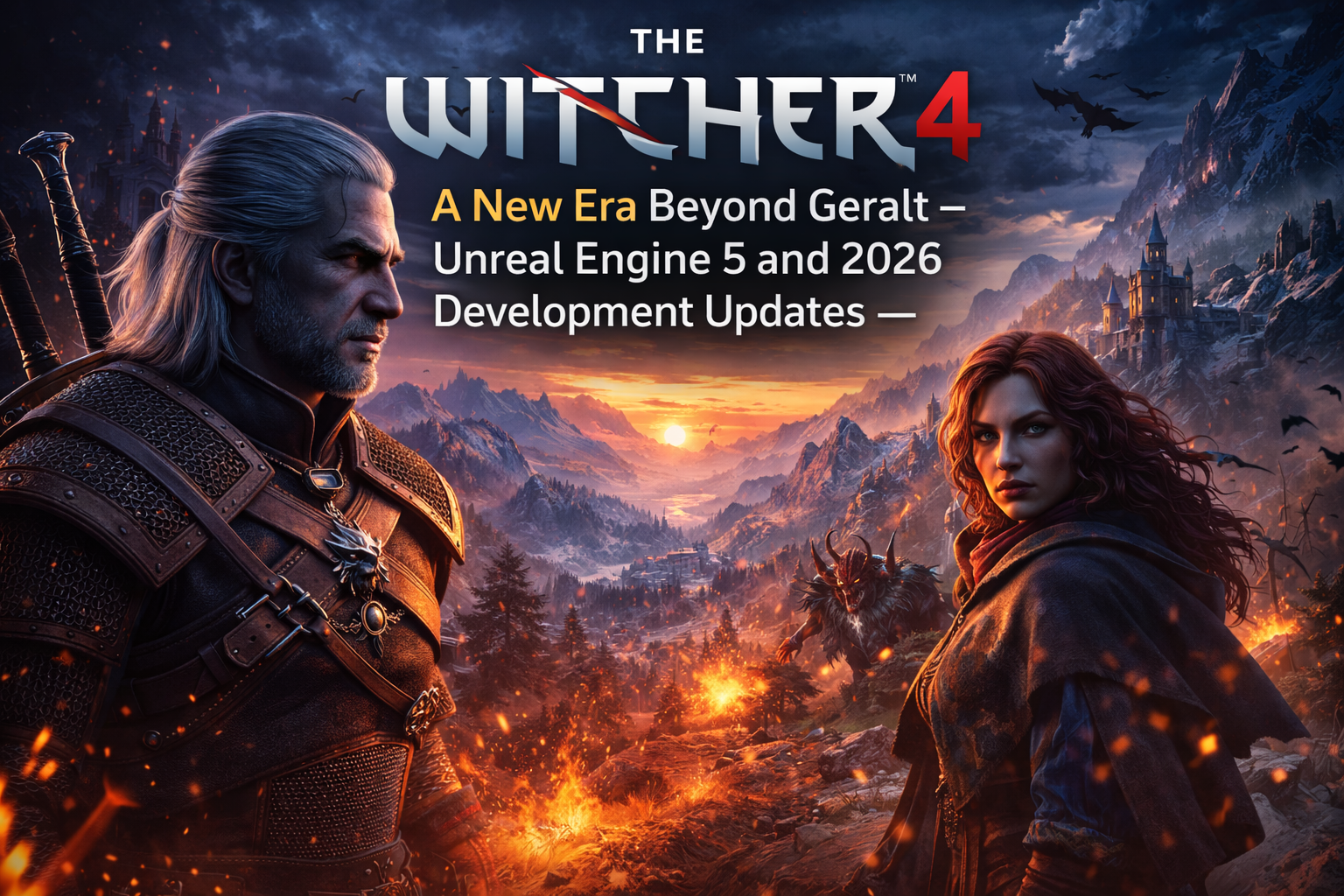
When The Witcher 3: Wild Hunt concluded the story of Geralt of Rivia in the breathtaking Blood and Wine expansion, fans were left with a bittersweet feeling. It was a perfect ending, but the world of The Continent was too rich to leave behind. Fast forward to 2026, and CD Projekt Red (CDPR) has officially shifted the majority of its massive development team to Project Polaris—the codename for what the gaming community calls The Witcher 4.
This is not just a sequel; it is the beginning of an entirely new AAA RPG saga. As development hits full stride this year, we at InfoHubPK have compiled a comprehensive, 1000-word deep dive into everything you need to know about the next generation of Witcher games.
1. Moving Beyond Geralt: The School of the Lynx
The most significant question surrounding Project Polaris is: Who will we play as? CDPR has made it abundantly clear that Geralt’s story is over. While he might appear as an NPC or a mentor figure, he is no longer the protagonist.
The biggest clue came from the official teaser image showing a Witcher medallion half-buried in the snow. It wasn’t the iconic Wolf, nor was it a Cat or a Griffin. It was a Lynx.
-
A New Witcher School: In 2026, lore experts have confirmed that the School of the Lynx is an entirely new addition to the official canon. This allows CDPR to write a fresh narrative without being tied down by the existing books.
-
Custom Character or Pre-defined? Leaks from the development team suggest CDPR is debating a hybrid approach. Players might be able to heavily customize the appearance and combat style of the new Lynx Witcher, similar to Cyberpunk 2077’s V, while still retaining a fully voiced, cinematic personality.
2. The Power of Unreal Engine 5 (UE5) in 2026
For over a decade, CD Projekt Red built its games on its proprietary REDengine. However, for The Witcher 4, they have formed a strategic partnership with Epic Games to utilize Unreal Engine 5. In 2026, UE5 has matured significantly, and the results for Project Polaris are expected to be nothing short of revolutionary.
-
Lumen (Real-Time Global Illumination): Gone are the days of “baked” lighting. If you cast the Igni sign in a dark, damp cave, the fire will realistically illuminate the stalactites and cast dynamic shadows in real-time.
-
Nanite (Virtualized Geometry): This technology allows developers to import film-quality assets directly into the game. Forests won’t just be flat textures; every single leaf, branch, and piece of bark on the trees in the Northern Kingdoms will be rendered with millions of polygons, with zero performance drops.
-
No More Buggy Launches? The switch to UE5 is also a practical one. Epic Games provides massive support and pre-built tools, meaning CDPR can focus on storytelling and world-building rather than fixing deep-rooted engine bugs.
3. Revamped Combat and RPG Mechanics
While The Witcher 3 is a masterpiece, its combat system was often criticized for feeling “floaty.” The 2026 development updates suggest a massive overhaul in how the new Lynx Witcher fights.
-
Weight and Impact: Using advanced motion-matching technology, sword strikes will feel heavy and deliberate. If your sword hits a monster’s armored shell, you will see and feel the deflection.
-
Advanced Alchemy: The alchemy system is being redesigned. Instead of simply pausing the game to drink a potion, preparing for a hunt will require tracking monster footprints, studying their weaknesses in real-time, and setting physical traps in the environment.
-
Environmental Magic: The Witcher Signs (Aard, Igni, Quen, Yrden, Axii) will interact directly with the UE5 physics engine. Using Aard on a frozen lake could shatter the ice, dropping enemies into the freezing water below.
4. A Seamless, Living Open World
Cyberpunk 2077 taught CDPR a lot about building dense, seamless environments. The map for The Witcher 4 is rumored to be larger than Wild Hunt, but more importantly, it will be incredibly dense.
-
Zero Loading Screens: Thanks to the NVMe SSDs of current-gen consoles (PS5, Xbox Series X) and modern PCs, you will be able to ride your horse from a sprawling city, seamlessly enter a multi-story tavern, and head down into the cellars without a single loading screen.
-
Dynamic Weather and Seasons: In 2026, open-world games demand realism. Leaks suggest that Project Polaris features a dynamic seasonal cycle. A mountain pass that is green and accessible in the summer might be blocked by deep, physics-based snow in the winter, forcing you to find an alternative route or use magic to clear the path.
5. Release Date Expectations: When Can We Play?
AAA game development takes longer than ever. CDPR has stated that Project Polaris is the first game in a new trilogy, and they plan to release all three games within a six-year window.
Since the game entered full production in 2024/2025, industry analysts in 2026 predict that the official gameplay reveal will happen later this year, with a targeted release date of Late 2027 or Early 2028.
Conclusion: A Return to Fantasy
The hype surrounding The Witcher 4 is unparalleled. By leaving the baggage of the REDengine behind and embracing Unreal Engine 5, CD Projekt Red is setting the stage for the next decade of RPGs. While we will miss Geralt, the School of the Lynx opens up infinite possibilities for dark, mature, and visually stunning storytelling.
What are your thoughts on moving away from Geralt? Are you excited to play as a brand-new Witcher? Let us know your thoughts in the comments!
